Showing posts with label ultralight. Show all posts

Packing list for overnight backpacking trip


I'd like to share with you my suggested packing list for an overnight backpacking trip. I keep my pack lightweight by leaving out items such as trowels, electronic gadgets, and recreational items such as books and decks of cards. These are fine to take car camping, but when backpacking, the question I ask myself is this: can I survive and be comfortable without this?

My must-haves


Leaving these items out would cause a health concern and greatly reduce my comfort or chance of survival if I got injured or stuck in a wilderness survival scenario.

Backpack
Tent
Sleeping bag
Sleeping pad
Flashlight
Map in ziplock bag
Lighter or matches in waterproof container
Sunblock
Chapstick 
Water bottle
Water filtration system
Pocket knife
Food
Clothing - 1 pair of underwear, 1 pair of socks, 1 top/T-shirt, leggings and fleece/wool sweater for the night, fleece hat
Toiletries bag - Toothbrush + toothpaste + floss, wet wipes
First aid kit - bandaids, Neosporin ointment, gauze, tweezers
Wallet bag - ID, cash and credit card in ziplock bag, permit if required

Extras that I take on most trips


These items are great to have, but it's not the end of the world if you leave home without them, or you can usually find someone to borrow from or substitute it with something else.

Plastic sheet to use as ground cloth under the tent
Inflatable pillow
Duct tape around water bottle
Extra "survival gear" - whistle, safety blanket, compass, signaling mirror
Metal mug, doubles as cooking pot
Stove
Spoon
Deodorant
Cap and/or sunglasses
Bandana
Ziplock bags
Garbage bag for trash
Potty bag - toilet paper for 1 day, extra ziplock bags, small bottle of hand sanitizer
Cell phone or a camera in a sock case
Pencil + paper

Summer extras 


Bathing suit
Small towel

Winter extras (possible rain / cold conditions)


"Trash bag type" disposable raincoat
Long-sleeved base layer
Gloves
Windbreaker
Crampons if ice is a possibility

Food items


Here is a list of no-hassle food items that I generally pick and choose from. The goal is to take relatively lightweight, calorie-dense foods that don't require refrigeration. Also, I like to spend more time exploring and less time cooking elaborate meals, so I prefer taking instant foods and not raw ingredients.

Breakfast: Cereal and milk powder, instant oatmeal, breakfast bars, dried fruits. Tea, instant coffee, sugar.
Snacks: Granola bars, nuts, raisins, coconut chips, crackers, peanut M&Ms, candy bars, chips. Chocolate every day!
Lunch and dinner: Knorr's pasta/rice meals, Ramen, pita bread, sundried tomatoes. Peanut butter, jelly. Tortillas. Instant soups and noodles where you just add boiling water. Bagels, huge hunks of cheese and sausage! Tuna, hummus, turkey jerky. Ready-to-eat packets of Indian food. Vitamins.

Did I forget anything? What other items do you consider a must-have? Share in the comments below!

How to halve the weight of your backpacking food


Let me demonstrate some do's and don'ts of packing food for backpacking through the following example packing lists and show you how to cut the weight of your food in half. In both cases, we have enough food for two for an overnight backpacking trip. That includes (per person) two lunches, one dinner, one breakfast, and a variety of snacks.

Scenario #1: Way too heavy


  1. Don't bring too many cans.
  2. Don't bring too many fresh fruits or veggies. Apples are heavy, grapes make your hands sticky and are easy to squish in your pack.
  3. Bread spoils easily. For a single night, you'll be fine, but this would definitely get mouldy by day 3.
  4. Whatever you do, don't bring any glass jars!!!
Total weight: 10.4 lbs.

Scenario #2: Ultralight


  1. Do replace fresh fruits and vegetables with dried ones, e.g. dried apples, raisins, and sun-dried tomatoes.
  2. I've noticed pita spoils less easily than bread. Leave the bag open so that it dries and doesn't collect condensation on the inside of the bag.
  3. Cans can be replaced by instant meals where you just add water.
  4. Carry only as much Nutella spread as you'll eat, and that too in a lightweight plastic container. Better yet, bring individual-sized packets of honey or jam.
  5. Lots of calorie-dense trail mixes, granola bars, chocolate and crackers: good!
Total weight: 5.0 lbs.

That's a weight reduction of 52%!

Scenario #3: Happy medium


In reality, I usually strike a happy medium between the two scenarios and go mostly ultralight but bring a single apple and/or a carrot or two, as well. Or, if I go no-cook, I'll bring packets of Indian food, which do have some water weight, but at least I don't have to carry a stove and fuel.

Do you have any favourite lightweight backpacking staples you always pack, or any foods you can't live without and bring despite the weight? Share in the comments!

Backpacking in minimalist trail-running shoes

You might have heard the old adage of 1 pound on the feet equals 5 pounds on the back. Because of this, I've been slowly getting used to hiking in minimalist trail-running shoes, in preparation for climbing Mt. Whitney.
 
My beautiful Merrell shoes

How slowly? I got the shoes in mid-June, and in almost 2 months, I was up to jogging ~5 miles in them without my ankle or Achilles tendon hurting.

The shoes underwent their first real test this weekend, when I went backpacking in them for the first time. During the two-day trip, we hiked 11.6 miles and covered an elevation difference of 4,300 ft. I didn't weigh my pack, but it probably weighed around 25 lbs including water, which we had to carry with us. Now, a day after the trip, I can barely walk down stairs due to sore muscles, but my ankles are fine! Success. This means I will be hiking Mt. Whitney in these minimalist shoes.

It was interesting stepping on a pebble for the first time. You feel sharp rocks a lot more than in hiking boots, and even tennis shoes! Oh, and do not kick any cacti or agave, those thorns will go straight through the mesh parts!

What are your experiences backpacking in minimalist shoes? Post your comments below!

[Infographic] Zion Narrows Dayhike vs Backpacking vs Ultralight

Trip enjoyment = Wow-factor − Pain
Pain = Pack weight + Distance covered

I would definitely recommend packing lighter than we did, backpacking the Zion Narrows. (Read about it here). This is how I imagine the different trips would compare, if we had hiked the Narrows as an up-an-back day hike from the Temple of Sinawava as opposed to "regular" backpacking or going ultralight.

Zion Narrows Day hike vs Backpacking vs Ultralight Enjoyment


I've only done this hike in the regular backpacking way. Did I get the rest of them right? Share your experiences in the comments!

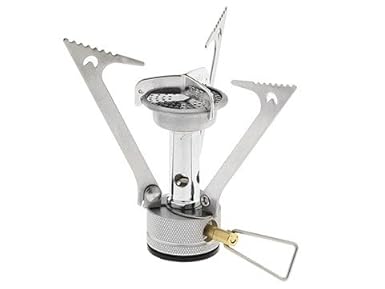
Gear: camping stoves

I've had my camping stove, an MSR Pocket Rocket, for over 5 years now, and last week was the first time it started acting funny. It seemed like gas wouldn't come out. Granted, it was windy and extremely dusty (read: occasional whiteout conditions).
So, now that I've been gradually making my switch to ultralight gear, I feel like it's time for an upgrade (or downgrade, depending on how you look at it). Overall, I would buy this piece of gear again... it it weren't for this neat stove that I found! A DIY stove you can make out of a tin can and burn alcohol in.


So now I'm trying to decide between the above hobo stove, which uses liquid alcohol for fuel, and the Esbit stove and pot stand, which uses solid fuel. Solid fuel provides more heat for a minimal amount of weight, and is therefore ideal for ultralight backpacking. But both of these options, alcohol and solid-fuel stoves, are slow to bring water to a boil.

Here's an excellent blog post by Josh Spice, who compares the weight versus efficiency of multiple types of stoves.

Or I might just have to go no-cook and buy a dehydrator instead!

What kind of stove do you use, if any? Leave a comment and share!

Making the switch to ultralight

I've been getting more and more enamored by how lightly the ultralight hikers travel, so I've decided to switch. I've been slowly switching my "big 3", and have so far replaced my tents, sleeping bag and backpack, with the latest item being the Mariposa Plus Ultralight backpack from Gossamer Gear; I asked for it for Christmas. :)

Here is how much my old gear weighed:

Category Item Model Weight (lbs)
Shelter and Sleeping System Tent Unknown 6.8
Shelter and Sleeping System Sleeping Bag Eddie Bauer 30-50 w/ Comfort Shell 6
Packing Backpack Kelty 75? ~4


TOTAL WEIGHT 12.8
Here is the weight of my new gear:

Category Item Model
Weight (lbs)
Shelter + Sleep System Tent Big Agnes Fly Creek UL2 2.625
Shelter + Sleep System Sleeping Bag North Face Women's Cat's Meow 20 deg 2.625
Packing Backpack Gossamer Gear Mariposa Plus Ultralight 1.39375


TOTAL WEIGHT 6.6

That's almost a 50% reduction in weight! I can't wait to try them all out, together. How much does your "big three" weigh? Share in the comments!